
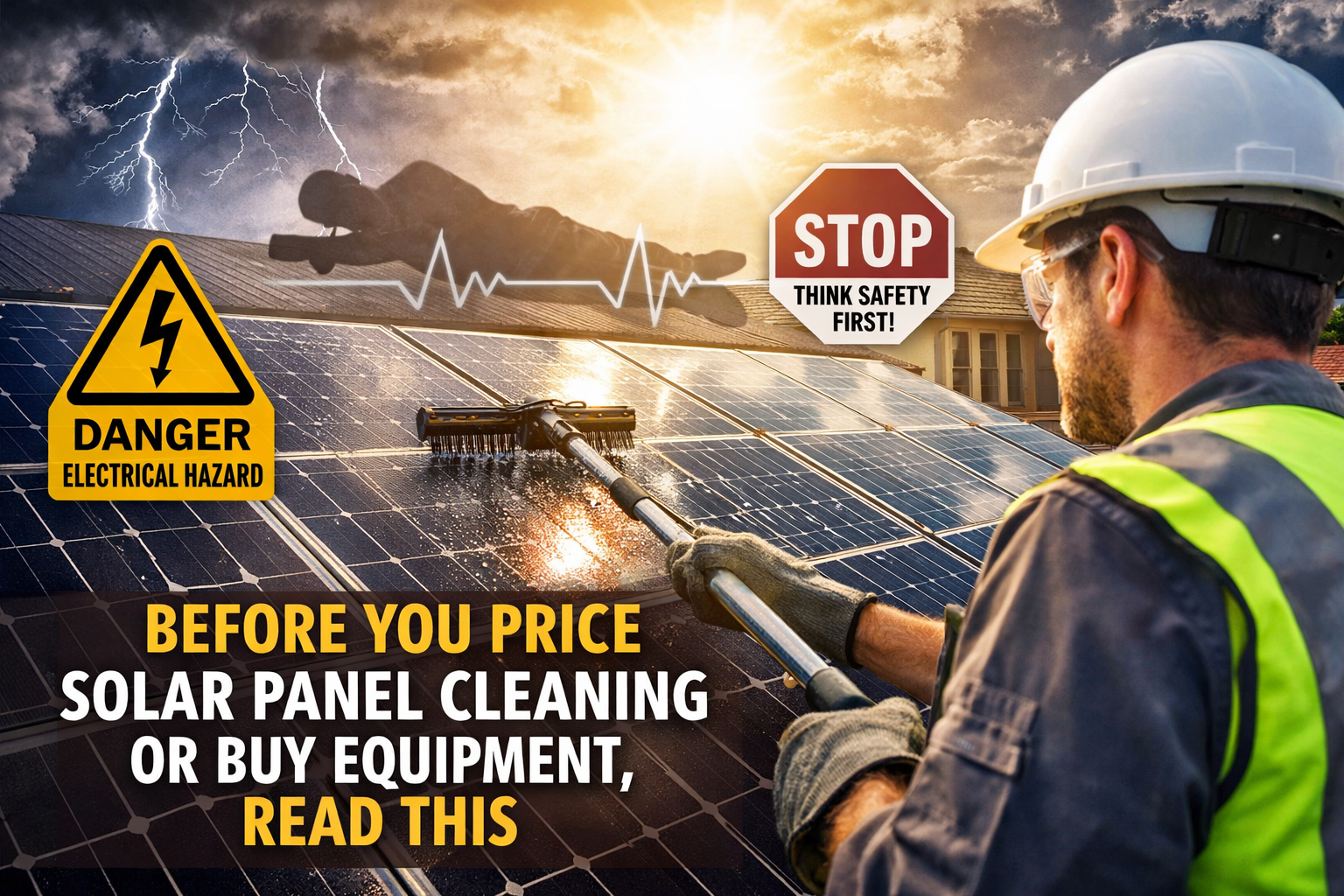
If you are entering solar panel cleaning from window cleaning or pressure washing, do not start with price lists or shopping lists.
Start with this reality:
Even residential solar can kill you.
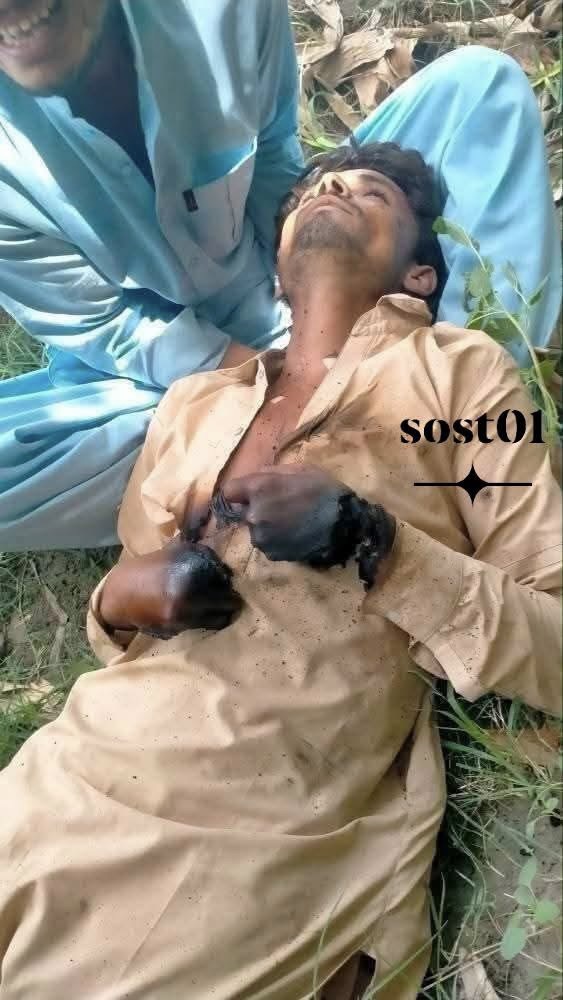
PV systems generate electricity whenever they are exposed to light, and solar workers face real electrocution and arc-flash hazards. Public 2025 reporting also included multiple fatal electrocution incidents linked to solar-panel cleaning activity, including cases reported in Pakistan and Brazil.
That is why the order matters.
Training first.
Competence second.
Insurance third.
PPE fourth.
Then methods, pricing and equipment.
This Is Not Just Another Cleaning Service
The biggest mistake beginners make is assuming solar cleaning is mainly a cleaning job.
It is not.
It is specialist work carried out around live electrical equipment, often at height, often with water, and often on roofs where one wrong assumption can have serious consequences. OSHA notes that solar workers are exposed to electrical hazards including electric shock, burns and arc flash, and solar safety guidance warns that panels should be treated as live electrical devices because they generate electricity whenever exposed to sunlight.
So if your first question is, “What do I charge?” or “What brush should I buy?”, you are starting in the wrong place.
The first question should be:
Am I actually competent to work safely around live solar?
Residential Does Not Mean Low Risk
Many beginners wrongly assume domestic rooftop solar is the easy end of the market.
It is not.
A house may have fewer panels than a commercial roof, but it can still carry dangerous voltage, still involve work at height, and still contain hidden defects or damaged components that change the risk completely. ISCA’s own training pathway reflects that reality by positioning the Foundation Solar Panel Cleaning Technician course as the starting point for safety-led entry into the trade.
When someone says, “It’s only a house,” that is usually a sign they do not yet understand the work.
The First Gear You Should Buy Is PPE
This point is critical.
The first money you should set aside is not for brushes, poles or cleaning systems.
It is for the PPE you will be taught about in proper training.
If people buy all the physical cleaning gear first, but have not budgeted for PPE, the temptation to go out and start cleaning without proper protection becomes far too great. That is a bad way to enter a high-risk trade.
Anyone serious about getting into solar cleaning should budget around $1,000 per PPE set as part of the cost of entering the trade properly.
ISCA’s SPCT course content explicitly includes essential PPE, and ISCA also has a dedicated PPE section on the website so contractors can build out the right setup after training.
Training Before Pricing. Competence Before Kit.
Training is not something you do later once you have “tested the market.”
Training is what helps determine whether you are ready to enter it at all.
Most individuals start with Foundation SPCT, then build from there. ISCA’s current training pages position SPCT as the starting point for professional, safety-led solar panel cleaning, with advanced PV Fire Safety available as the next stage for contractors who want deeper competence.
That is the right order.
Learn the hazard profile.
Learn what not to touch.
Learn what a no-go job looks like.
Learn the role of PPE.
Learn the limits of your method.
Then worry about pricing.
Because pricing without competence is just guesswork.
Do Not Assume Your Current Insurance Is Enough
Before quoting your first solar job, verify your insurance position properly.
Do not assume that because you already clean windows, carry out exterior cleaning, or do pressure washing, your policy automatically covers solar panel cleaning.
Check first.
Declare the work properly.
Make sure the activity matches the cover.
That conversation should happen before the first job, not after the first incident.
Conclusion
So before you price solar panel cleaning, and before you buy equipment, get the order right.
Start with the fact that even residential solar can kill.
Start with the fact that publicly reported 2025 deaths linked to solar panel cleaning exist.
Start with training.
Start with competence.
Start with PPE.
Start with insurance clarity.
Then move on to methods, pricing and equipment.
That is the professional route into solar cleaning.
And in a trade where the consequences of getting it wrong can be fatal, it is the only sensible place to begin.
